
14 April 2026
Planning permission granted – now the real adventure begins
By Scott Hunter, Director of Planning and Building Regulations · 8 min read
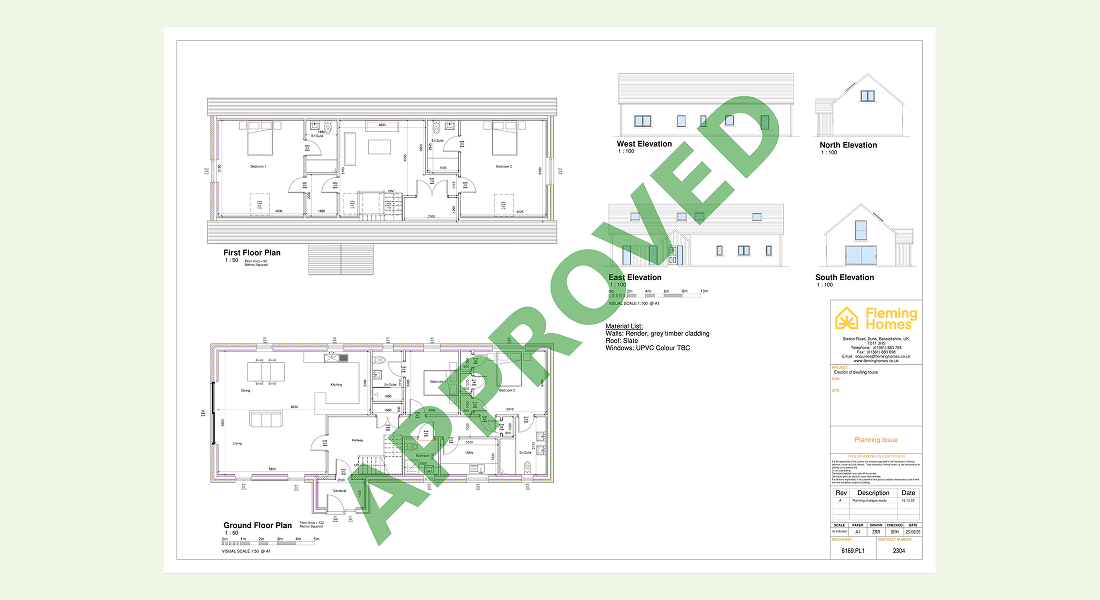
That approval letter is more than a piece of paper. It is the moment your vision steps out of your imagination and plants itself firmly in the real world. You have navigated something genuinely difficult – the UK planning system does not make it easy – and you deserve to take a breath and let that sink in.
But planning consent is the starting gun, not the finish line. There are several important steps between approval and breaking ground, and knowing what they are means you can move through them with confidence rather than anxiety. After more than 40 years of guiding self-builders through this journey, we know exactly where the stumbling blocks are – and how to step around them.
Here is everything you need to do next, in the right order.
After planning permission is granted, the seven key steps for a self-builder are:
- Review and discharge your planning conditions
- Assemble your technical team
- Submit your building regulations application
- Choose your building control provider
- Make your key technical decisions
- Review and stress-test your budget
- Start your utilities applications early
1. Review your planning conditions – and act on them immediately
Almost every planning approval arrives with conditions attached. Many are informational; others – known as pre-commencement conditions – are legally binding and must be formally discharged before any work starts on site.
This is not a technicality. Starting work before discharging pre-commencement conditions puts you in breach of planning control. The consequence is an enforcement notice, an immediate stop to work, and in serious cases, the revocation of your permission. The hours it takes to read your conditions carefully now are nothing compared to the months you could lose if you skip this step.
What to do
Go through every condition line by line. Write down which need to be discharged, what information is required, and in what sequence. Your planning agent – whether that is Fleming Homes or another – should be guiding you through this. If you used our planning service, we will already be on it.
2. Assemble your technical team
Up until planning, your design team’s focus was translating your vision into something the local authority would approve. That focus shifts now. The building regulations stage is technical, and it needs the right people around the table – early.
Depending on your project, your technical team will typically include:
- A structural engineer, to design your foundations and floor structure
- Your timber frame supplier – if you have not already engaged one, now is the time
- An energy assessor, for your SAP calculations and overheating analysis
- A drainage specialist
- A construction design coordinator, particularly if you are self-managing the build
Bringing these people in early – rather than scrambling for them later – means critical decisions are made by the right people at the right time. It also creates a coherent technical package, which makes building control sign-off considerably more straightforward.
At Fleming Homes, our building regulations service coordinates this for you. We bring the structural engineer, energy assessor, and timber frame technical drawings together in a single managed package – removing one of the most stressful coordination challenges a self-builder faces.
3. Submit your building regulations application
Building regulations set the standards for how your home is designed and built – covering structural integrity, insulation levels, ventilation, fire safety, drainage, and more. Planning permission gives you the right to build; building regulations govern exactly how you build it. Both are mandatory, and neither replaces the other.
England: two routes to building regulations approval
In England, you can take one of two routes:
- Build notice route: You notify your building control body that work is starting, and they carry out routine inspections throughout. There are no pre-approved drawings.
- Full plans route: Your technical team prepares a complete set of building regulations drawings, which are submitted to building control for review and approval before work begins.
We always recommend the full plans route. It means everyone on site – your groundworker, your frame erection team, your follow-on trades – is working from drawings that have been independently checked and signed off. It reduces on-site disputes, costly variations, and the kind of misunderstandings that delay builds by weeks.
Scotland: one route only
In Scotland, you must submit a full set of plans to building control before works can commence. There is no build notice equivalent. Works cannot legally begin until your building warrant has been issued.
4. Choose your building control provider
In Scotland, your local authority is your building control provider – there is no choice to make.
In England, you can choose between your Local Authority Building Control (LABC) or a Registered Building Control Approver (RBCA) – a private sector provider. Both perform the same statutory function of checking compliance and inspecting works. The differences lie in service levels, responsiveness, and the quality of their working relationship with your site team.
Ask your timber frame supplier and structural engineer who they have worked with successfully in your area. Their experience is your best guide. And remember: you must appoint your provider before submitting your building regulations application.
5. Make your key technical decisions now
While your project is moving through the building regulations process, there is a parallel job to do: making the decisions that your technical team needs to design around. The sooner you make these, the fewer costly revisions arise downstream.
The most important decisions to address now include:
- Heating system: underfloor heating, radiators, air source heat pump, ground source heat pump? Each has different structural and spatial implications.
- Ventilation: will you have an MVHR (mechanical ventilation with heat recovery) system? This affects how the building is designed and detailed.
- Bathroom and kitchen layouts: your drainage runs and structural openings depend on these.
- Insulation specification and airtightness target: important for your SAP calculation and long-term energy bills.
- Glazing and external door specifications: delivery lead times for high-performance glazing can be 12–16 weeks or longer.
These feel like details, but making them now means your home is designed around your actual life – not the other way around.
6. Revisit your budget – with fresh eyes
Now that your design is fully defined, your technical team is assembled, and key decisions are being made, the true cost of your build is coming into focus. This is the right moment to revisit your budget – not because costs have necessarily increased, but because you now have the clarity to know.
Use your Fleming Homes cost calculator as your starting point, then work with your estimator and quantity surveyor to test your contingency. A well-managed self-build typically carries a 10–15% contingency; the planning and building regulations stage is the last clear opportunity to stress-test that figure before money starts moving.
7. Start your utilities applications – earlier than feels necessary
If your plot is not fully serviced, bringing utilities on site – electricity, mains water, drainage connections – takes longer than almost every self-builder expects. Grid connection applications alone can take six months or more in some regions. Waiting until the rest of your project is ready means waiting longer than you need to.
Start the conversations with your utility providers now. Identify what is already on site, what needs to be brought in, and what the lead times are. Set the wheels in motion while your technical team is working on the drawings – and you will arrive at groundbreaking day with one less thing standing in your way.
With the launch of Platform 1, Fleming Homes is responding directly to demand for higher-performing homes, faster construction and a more efficient building process – all while staying true to its self-build roots.
FAQ
How long does it take to get building regulations approved after planning permission?
In England, a full plans application typically takes 5–8 weeks for building control to review, provided the submission is complete. In Scotland, a building warrant application usually takes 6–20 weeks depending on local authority workload and the complexity of the project. Engaging your technical team and preparing your drawings as early as possible is the most effective way to reduce delays.
What are pre-commencement planning conditions?
Pre-commencement conditions are conditions attached to your planning approval that must be formally discharged – that is, approved by your local planning authority – before any work begins on site. Common examples include requirements for contamination surveys, archaeological assessments, or approval of external materials. Starting work before discharge is a breach of planning control.
Do I need building regulations if I already have planning permission?
Yes. Planning permission and building regulations approval are entirely separate statutory processes. Planning permission grants the right to build; building regulations approval ensures the building is constructed to meet legal standards for structure, safety, energy efficiency, and accessibility. Both are required.
Can I choose my own building control inspector for a self-build?
In England, yes. You can use either your Local Authority Building Control (LABC) or a Registered Building Control Approver (RBCA) – a private sector provider. In Scotland, building control is provided exclusively by the local authority. Your appointed provider must be confirmed before you submit your building regulations application.
How long after planning permission can I start building?
You can start preparing once your pre-commencement planning conditions are discharged. However, in practice, most self-builders use the time between planning approval and groundbreaking to complete their building regulations application, finalise their technical team, and procure their timber frame. In Scotland, works cannot legally begin until the building warrant is issued.
How can Fleming Homes help after planning permission is granted?
Fleming Homes offers a full building regulations service that coordinates your structural engineering, energy assessments, timber frame technical drawings, and building control submissions in a single managed package. Our planning and technical teams work together, which means a seamless handover from the planning stage into the build stage – reducing delays, cost surprises, and the stress of managing multiple consultants independently.