

A Modern Barn, Built by Hand in Kent
Black steel, charred timber, and a couple who learned every trade as they went.
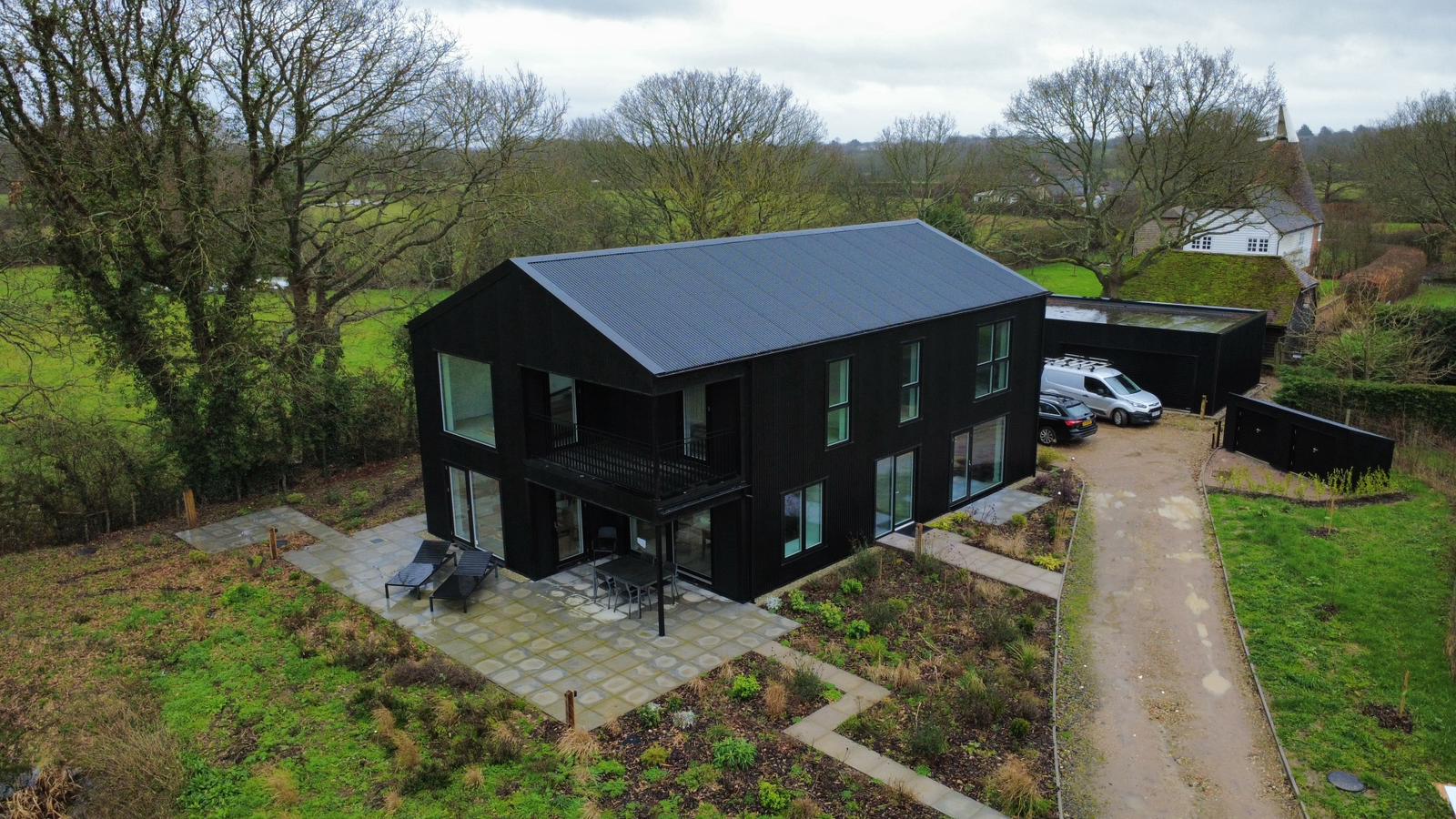
In the Kent countryside, Christina and Andrew set out to build a home that would feel both contemporary and quietly at ease in its setting. What they finished is a modern barn – a clean architectural form rooted in the local vernacular, shaped almost entirely by their own hands.
A modern barn, in the local language
The exterior was chosen to balance innovation with tradition. Black steel cladding gave the house its clean, contemporary form, while Japanese-style charred timber added texture and warmth across the balcony and terrace.
“We wanted it to look modern but still feel like there had always been a barn here. There’s definitely a nod to the local vernacular – just done in a modern way.” – Christina
The result reads as a barn that belongs – and as a home built for the way they live now.
Performance, sealed in detail by detail
Energy efficiency mattered, and Christina and Andrew took it personally. They added 50mm of insulation throughout with battens, taped and foam-sealed every junction, and ran expanding foam tape under the skirting boards for an extra layer of airtightness.
A mechanical ventilation with heat recovery (MVHR) system, a 7.9kW air source heat pump, and underfloor heating across both floors complete the performance picture. By keeping the heating zones simple, they prioritised efficiency and long-term running costs over complexity.
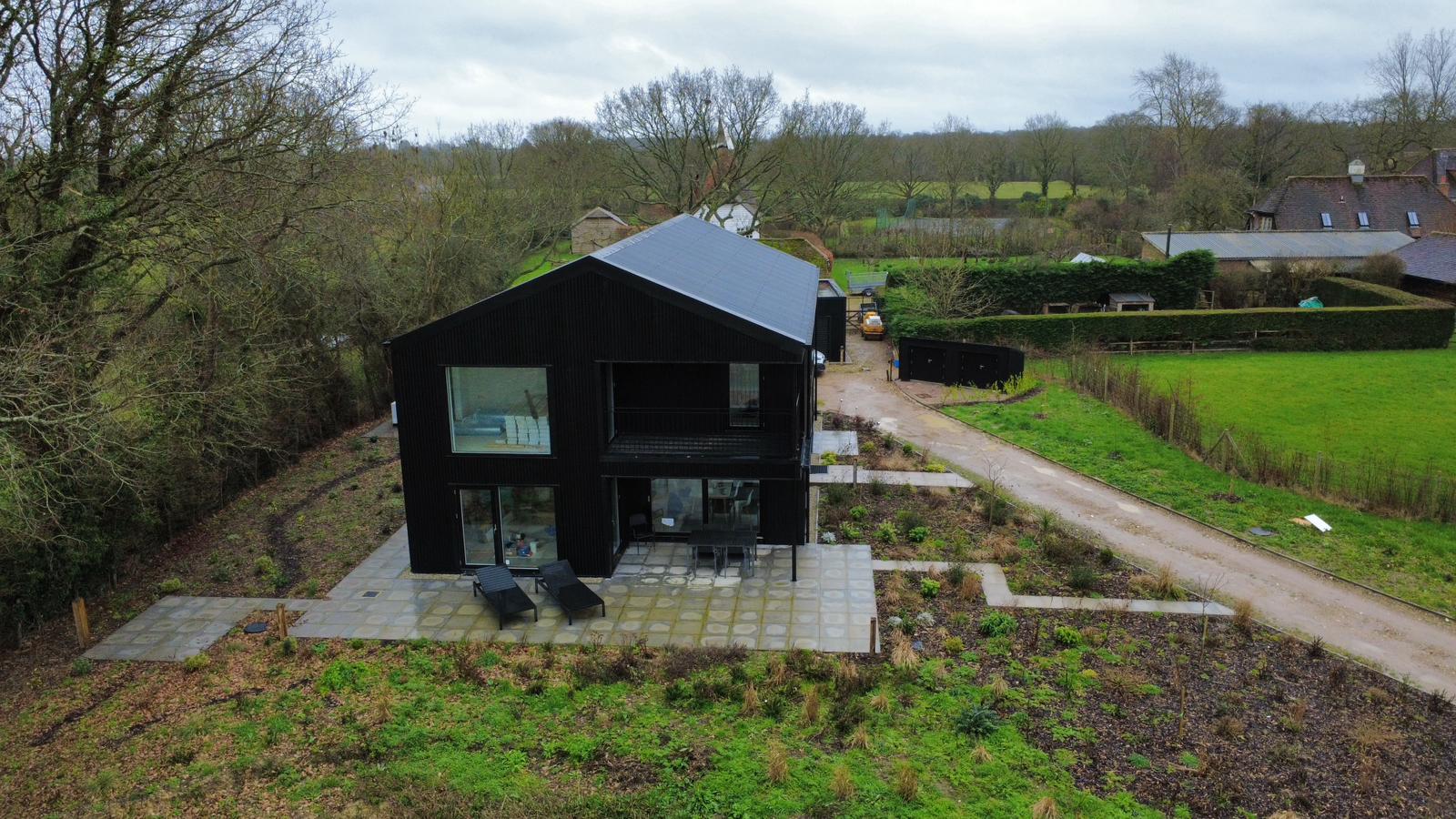
A genuine self-build
Andrew took a 15-month sabbatical to lead the build. Christina took three months off during groundworks – and, in her words, loved every second of being on site.
Between them, they completed a significant share of the work themselves: all the plumbing apart from the heat pump and manifold, and every piece of cabinetry installation. Specialist trades were brought in only where they were truly needed, which kept both quality and budget within reach.
“You have to become an expert in every single thing that you’re doing. But you only have to be an expert for that week while it’s happening.” – Andrew
The hardest part? The roof insulation, fitted between the rafters by hand.
There were tougher days too.
“We knew it was going to be hard work, but I think we underestimated the amount of effort. The number of times we go back to our rented home and we’re just absolutely shattered.” – Christina
And yet:
“When we look at it, we just think – wow, we designed and built that.”
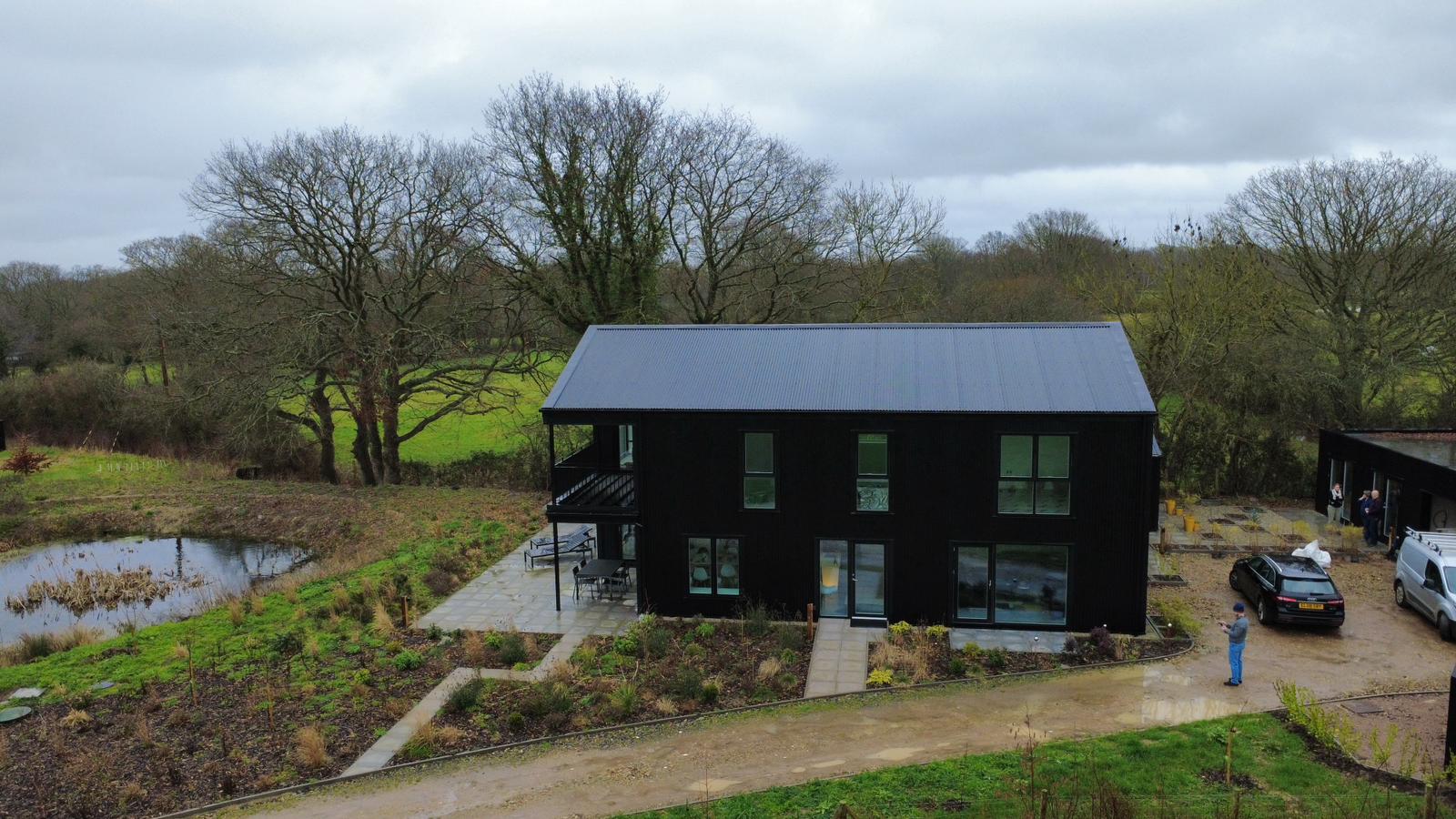
Groundworks to weathertight, fast
Groundworks began in August 2024. The Fleming Homes kit arrived in October 2024. The erectors completed the superstructure in just 17 days – turning months of planning into a weathertight shell ready for Christina and Andrew to take on the rest.
A home designed to evolve
The layout flexes between four and five bedrooms, with an open-plan upper floor that can be reconfigured later by adding partitions. Polished concrete downstairs and engineered timber upstairs give the house a contemporary feel and a long working life. Piled foundations were engineered to suit the specific constraints of the site.
Sustainability runs through the project. A 5,000-litre rainwater harvesting tank and a dedicated sewage treatment system sit alongside the orchard the couple planted when they first bought the land – now well established, and quietly shaping the landscape around the new house.
Working with Fleming Homes
For Christina and Andrew, Fleming was less supplier and more collaborator. The relationship started at concept stage, ran through manufacturing, and saw the kit erected on site in just over a fortnight.
“It felt like a partnership rather than just a supplier relationship.”
Guidance and expertise on hand from the first sketches through to the final lift of the last frame.
The power of self-build
Christina and Andrew’s home shows what’s possible when self-builders commit fully to the journey. Theirs is a highly personalised, high-performance house, shaped end to end by their own dedication.
It’s also a quiet argument for the route itself: that with the right partner and a willingness to learn, you can build a home that is architecturally striking, efficient, flexible – and unmistakably yours.
FAQ
How long does it take to erect a Fleming Homes timber frame kit?
Erection time depends on the size and complexity of the house, but Christina and Andrew’s superstructure was completed in 17 days. A typical four-bedroom family home can be brought to weathertight stage in around two weeks. To talk through what your own build might look like, get in touch through the contact page.
Can self-builders take on significant work themselves on a Fleming Homes timber frame house?
Yes – and many do. Christina and Andrew completed nearly all of their plumbing and cabinetry installation themselves, alongside the insulation and airtightness work. The Fleming Homes kit gives you a weathertight shell to take forward, and you decide how much of the rest you take on. The complimentary architectural design service is the natural starting point.
What energy efficiency features did Christina and Andrew include in their build?
Their performance package includes 50mm of additional insulation throughout with battens, extensive taping and foam sealing at every junction, a mechanical ventilation with heat recovery (MVHR) system, a 7.9kW air source heat pump, and underfloor heating across both floors. They kept the heating zones simple to prioritise long-term efficiency.
Where in the UK does Fleming Homes deliver timber frame self-build kits?
Fleming Homes delivers timber frame kits across the whole of the UK from the Scottish Borders factory in Duns. Christina and Andrew’s home in Kent is one of many builds outside the south of Scotland. More examples are in the success stories portfolio.