
12 May 2026
The Hidden Benefit of the Self-Build Learning Curve
By Sarah Mathieson, Managing Director, Fleming Homes
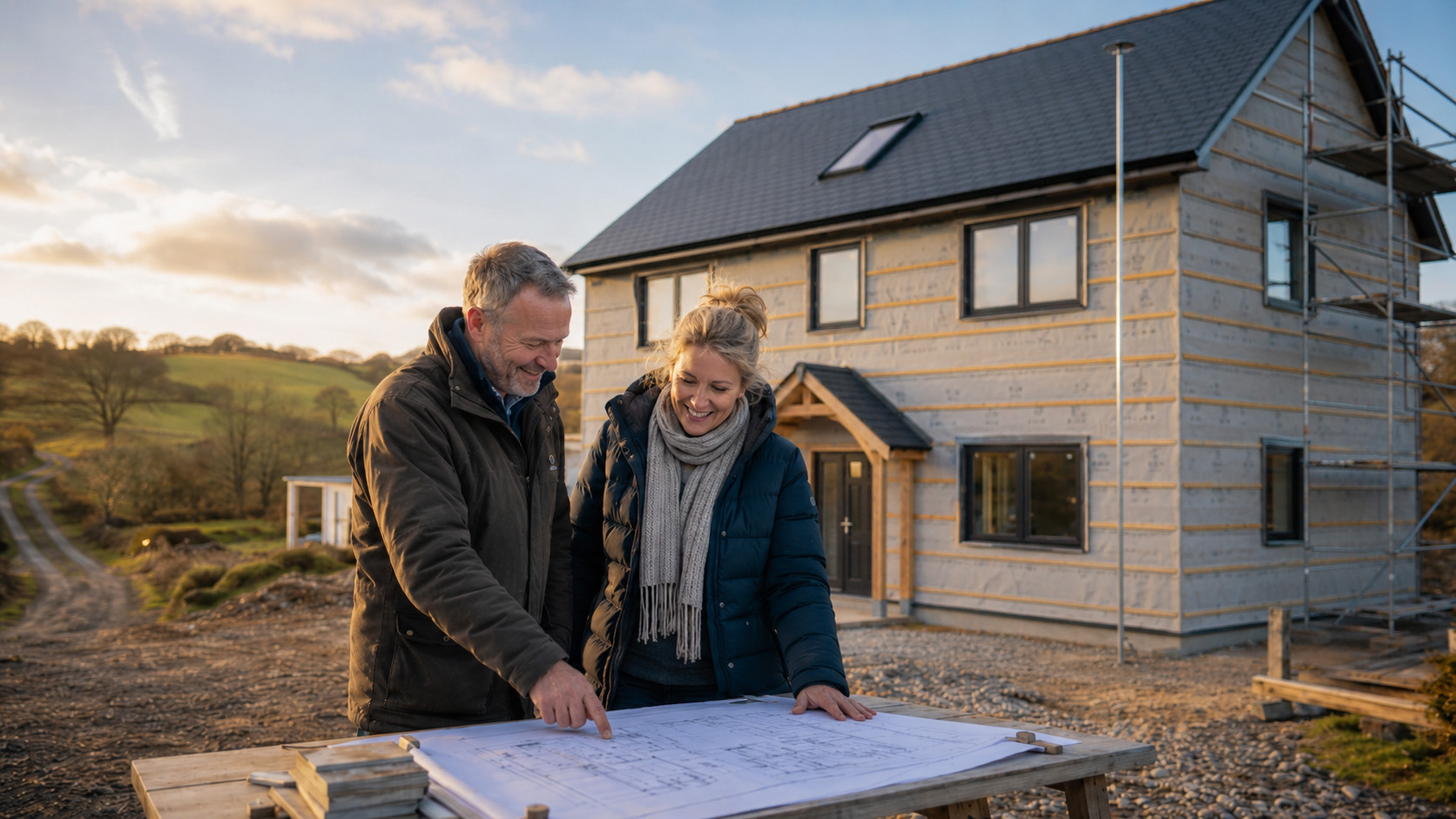
When people first begin thinking about a self-build project, one of the earliest questions is how much of the process they want to manage themselves.
At one end of the spectrum, you can appoint a main contractor to take on almost everything. At the other, you can project-manage the build yourself: appointing and coordinating trades, making decisions, managing your budget and responding to issues as they arise.
For many self-builders, the appeal of self-managing is clear. It can be one of the most economical ways to build a new home. It also brings a strong sense of ownership. You understand your project deeply. You stay close to the decisions. You see the home take shape knowing that you have played an active part in bringing it to life.
Of course, there are challenges too. Coordinating a self-build takes time, organisation and resilience. There are decisions to make, professionals to speak to, budgets to monitor and sequences to understand. But for many people, the most daunting part is not the physical build itself. It is the steep learning curve that comes with it.
Most people who build their own home are not construction professionals. They are stepping into a world of technical terminology, statutory requirements, design choices, structural considerations, build schedules and trade sequencing. And much of that begins before the first spade goes into the ground.
It is easy to see why this can feel overwhelming. People often use the phrase, “you don’t know what you don’t know”. In self-build, that feeling can be very real.
But what if we looked at it differently?
What if the learning curve was not simply one of the burdens of self-build, but one of its hidden benefits?
Learning as part of the reward
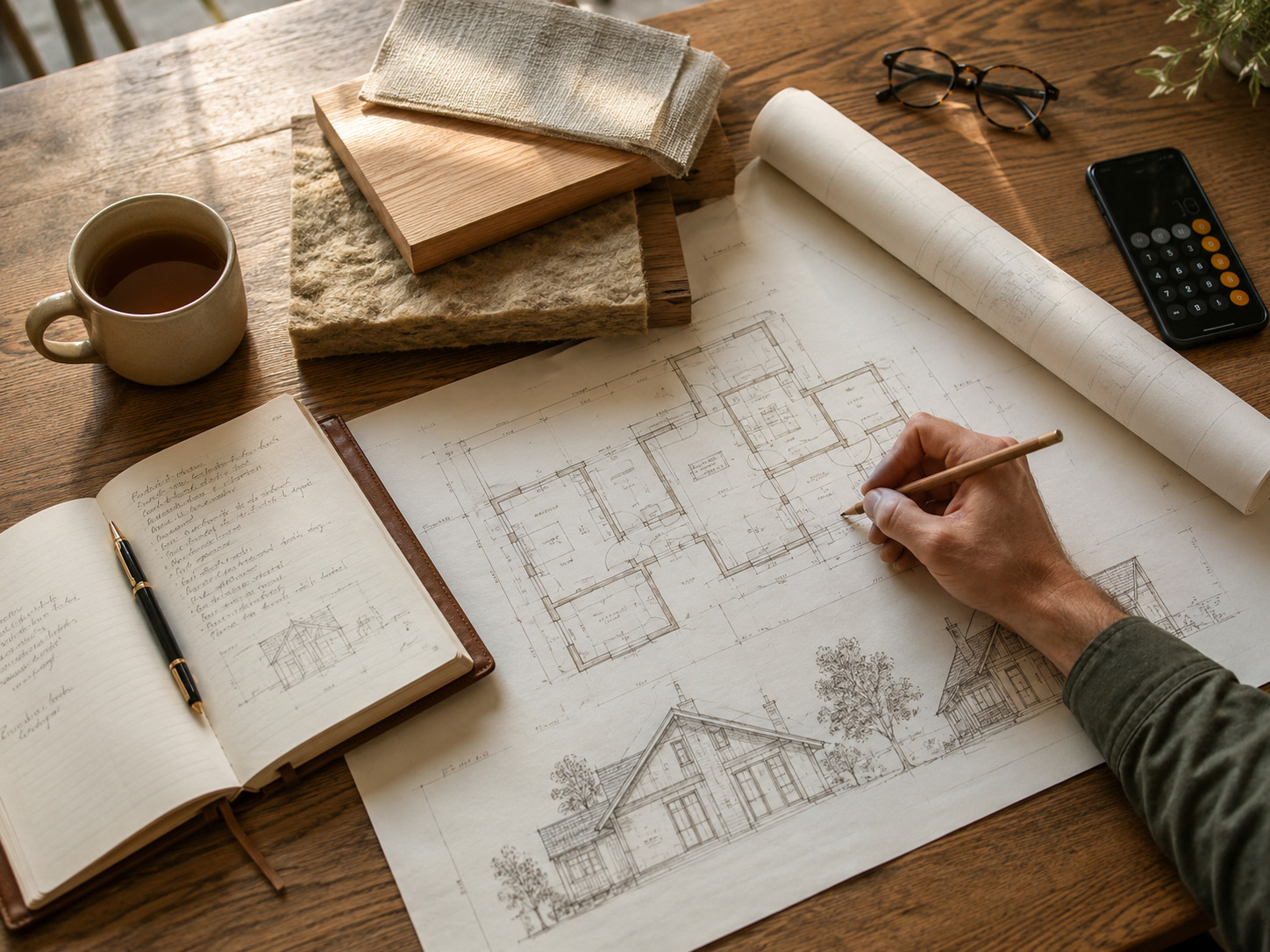
Self-build is often discussed in practical terms: cost per square metre, planning permission, thermal performance, structural systems, energy efficiency and build times. All of that matters. A successful project depends on good decisions, careful preparation and the right technical support.
But there is also a human story.
When you self-manage a project, you do not simply end up with a new home. You also build knowledge, confidence and judgement along the way.
You learn how your home is put together. You begin to understand the materials being used and why they matter. You become better at asking questions, comparing options and weighing advice. You learn when to make a decision yourself and when to draw on the expertise of others.
That kind of learning is active, practical and purposeful. It is not abstract. It is connected to something deeply personal: the place you are going to live.
There is growing recognition that learning new things in adulthood can be valuable for our confidence, wellbeing and sense of purpose. The NHS includes “learn new skills” as one of its five steps to mental wellbeing, noting that learning can help boost self-confidence and build a sense of purpose. The 2024 Lancet Commission on dementia prevention also highlights the importance of staying cognitively, physically and socially active in mid and later life.
That does not mean a self-build project should be treated as a health intervention. It should not. But it does suggest something worth recognising: taking on new information, solving problems, collaborating with others and learning through experience can be good for us in ways that go beyond the immediate task.
Self-build asks a great deal of you. But it can also give a great deal back.
The difference between challenge and overwhelm
There is, however, an important distinction between a learning curve that feels energising and one that feels overwhelming.
Learning can be rewarding when you feel informed, supported and able to make decisions with confidence. It becomes stressful when you feel left alone, rushed or expected to understand everything without guidance.
This is where the right team around you makes all the difference.
Self-managing does not mean doing everything yourself. It means taking an active role in your project while drawing on the right expertise at the right time. Designers, engineers, manufacturers, trades and specialist suppliers all have a part to play. Their role is not to take the project away from you, but to help you move through it with greater clarity.
That support matters. A self-builder does not need to become an architect, engineer or builder overnight. But they do benefit from understanding enough to make informed choices and feel in control of the journey.
At Fleming Homes, we see this often. The most confident self-builders are not necessarily the ones who know the most at the beginning. They are the ones who are willing to learn, ask questions and build the right support around them.
With clear guidance, flexible design options and experienced people alongside you, the learning curve becomes less intimidating. It becomes part of the process of turning an idea into a home.
Knowing your home from the inside out
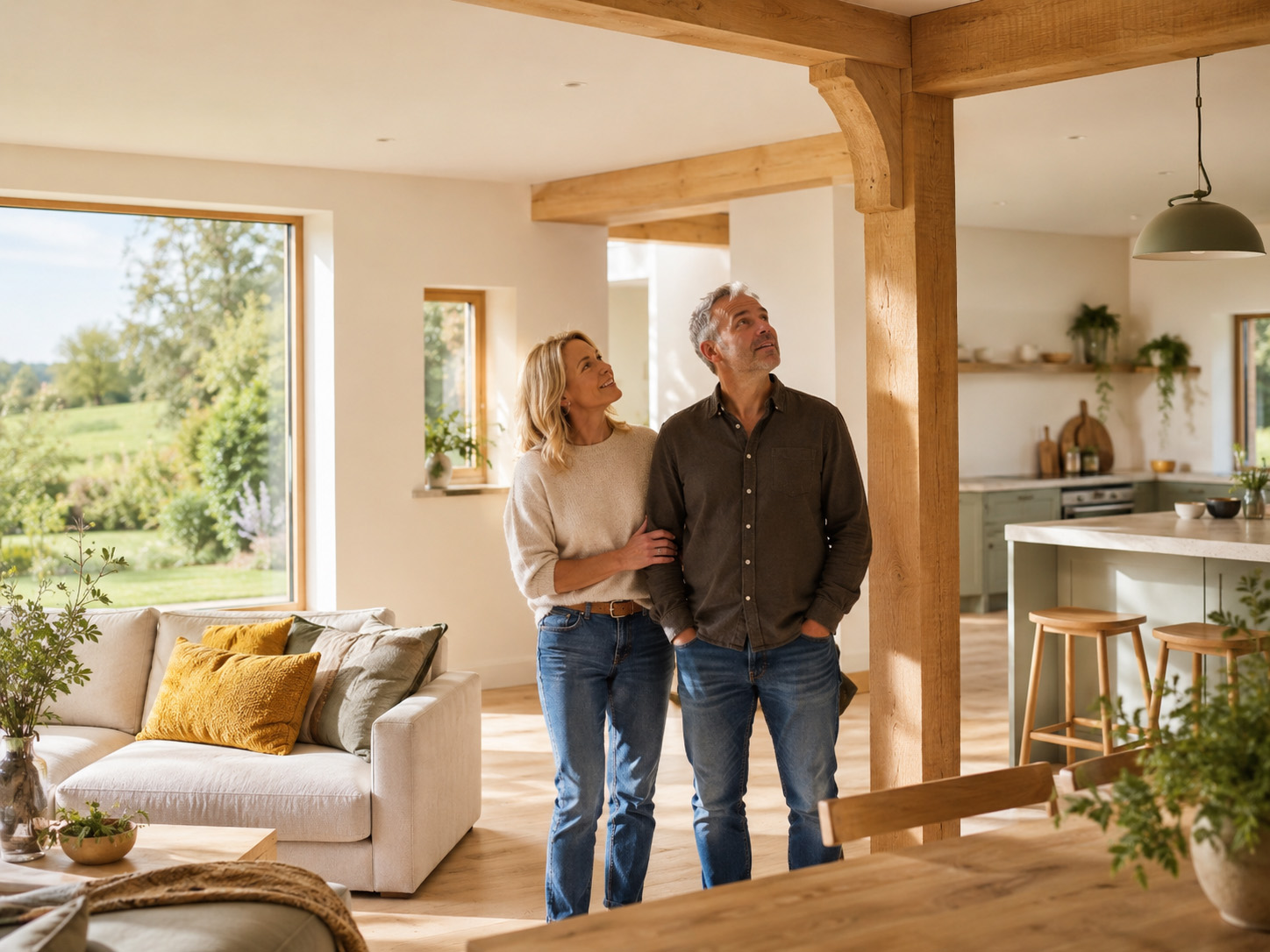
One of the lasting rewards of self-build is the knowledge you carry with you after the project is complete.
People who take an active role in their build often finish the process knowing their home in a way few homeowners ever do. They understand why certain materials were chosen. They know how the structure works. They remember the decisions, the compromises and the improvements that shaped the final result.
That knowledge does not disappear when you move in.
It becomes part of your relationship with the home. You understand it because you were involved in creating it. You know the thought that went into the layout, the orientation, the specification and the details that make it yours.
That can be deeply satisfying.
The end product is not only the house itself. It is also the confidence gained through the process. The sharper judgement. The practical knowledge. The sense of capability that comes from navigating something complex and coming out the other side.
A better way to see the learning curve
None of this means project-managing a self-build is easy. It is not. It requires time, energy, patience and a willingness to move through unfamiliar territory. There will be moments of uncertainty. There will be decisions that feel uncomfortable. There will be days when the learning curve feels steep.
But perhaps it is time we stopped talking about that learning curve only as something to fear.
The amount there is to learn may feel off-putting at the outset. Yet, handled well, it can become one of the most valuable parts of the experience. With the right support, self-build can help you become more knowledgeable, more capable and more confident.
That is one of the quiet rewards of building your own home.
You do not just gain a place to live. You gain a deeper understanding of how that place came to be. You gain the freedom to make informed decisions. And you gain the reassurance that, step by step, you are more capable than you may have imagined at the start.
The learning curve is not simply something to get through.
It may be part of what makes the self-build journey so rewarding.
— Sarah
Frequently asked questions
Is self-build hard for first-time builders?
Self-build is challenging, but it is far from impossible for first-time builders. Most self-builders are not construction professionals – they learn as they go, supported by designers, manufacturers and specialist trades who guide them through each stage. With the right team alongside you, the steep parts of the learning curve become manageable, and often genuinely rewarding.
Do I need construction experience to project-manage my own self-build?
No. You do not need a background in construction to self-manage a build. What you need is a willingness to learn, the discipline to make timely decisions and trusted experts to draw on at each stage – designers, engineers, manufacturers and trades. Many first-time self-builders successfully manage their projects from start to finish.
What is the steepest part of the self-build learning curve?
For most first-time self-builders, the steepest part is the early planning stage – understanding statutory approvals, design choices, structural systems and budget structure before construction begins. The good news is that this is exactly where the right team can guide you most effectively. Once you are on site, much of the heavy thinking is already done.
Is self-managing a self-build worth the effort?
For many self-builders, yes. Self-managing your build is one of the most economical routes to a new home, and it gives you a depth of involvement that few homeowners ever experience. You finish the project not only with a home, but with the confidence, knowledge and judgement gained from navigating something complex.
How do first-time self-builders cope with a steep learning curve?
By surrounding themselves with the right support. The most confident self-builders are not the ones who know the most at the beginning – they are the ones willing to ask questions, learn as they go, and lean on experienced people when they need to. Clear guidance and flexible design options make the process far less intimidating.
Can self-building genuinely build confidence and wellbeing?
Active learning, problem-solving and collaboration with others are recognised contributors to wellbeing in adulthood. The NHS lists “learning new skills” among its five steps to mental wellbeing, and the 2024 Lancet Commission on dementia prevention highlights the value of staying cognitively, physically and socially engaged through mid-life and beyond. Self-build is not a substitute for healthcare, but the experience often gives back more than people expect.
What support is available for first-time self-builders?
Self-builders typically draw on a team that includes a timber frame manufacturer, an architectural designer, a structural engineer, a planning consultant or agent, and skilled trades. At Fleming Homes, our free architectural design service, planning and building regulations support, and bespoke timber frame manufacture are designed to take the heaviest parts of the learning curve off your shoulders, so you can stay focused on the parts of the build you enjoy. If you are early in your journey and would like to talk it through with someone who has guided many self-builders down the same path, we’d love to hear from you.