09 July 2026
We Don’t Make a Commodity
By Sarah Mathieson, Managing Director
Conversations are one of the best parts of this job.
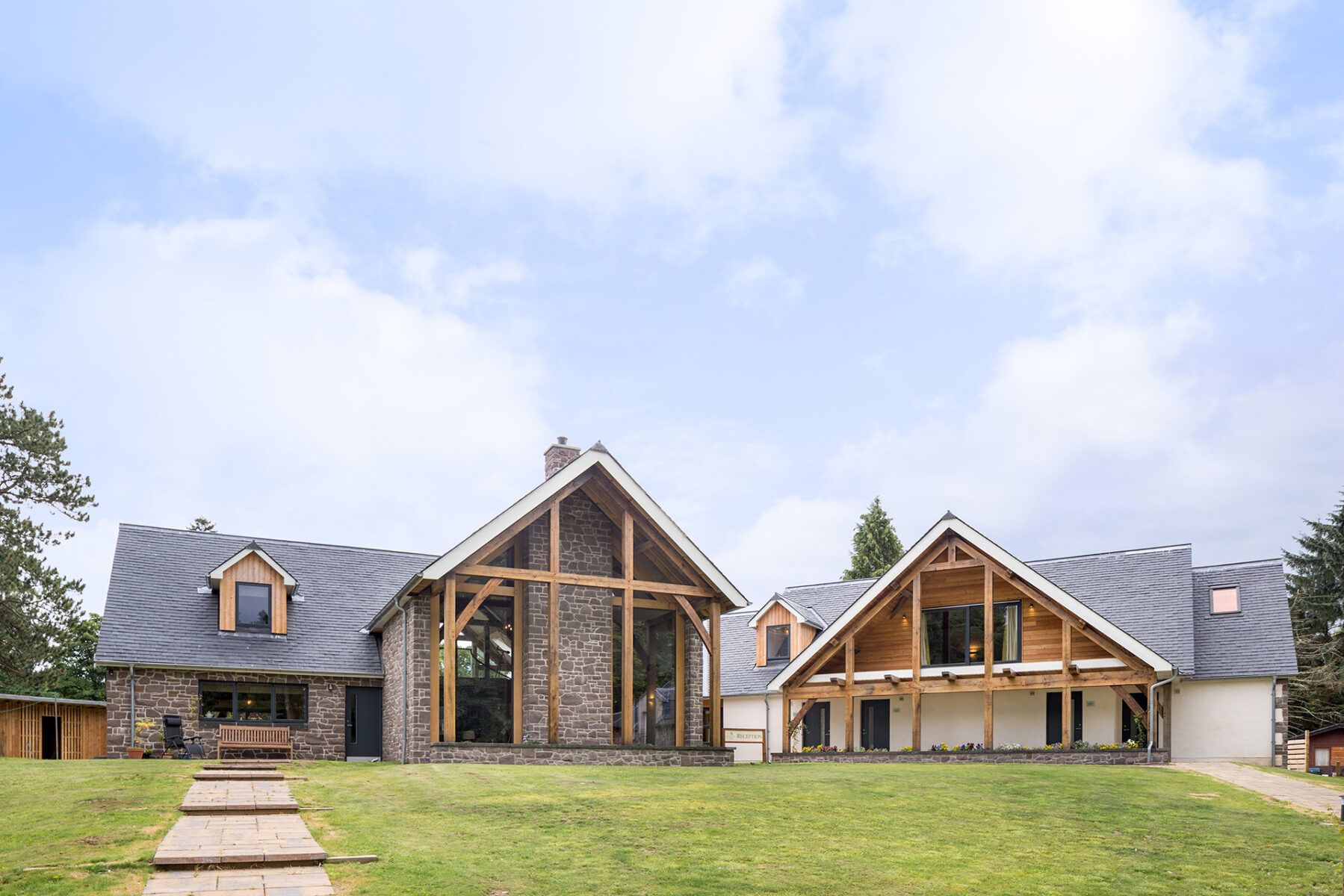
This week we hosted Iain Macdonald, Director of the TallWood Design Institute, and Professor Lech Muszynski of Oregon State University’s Department of Wood Science and Engineering. They were visiting from Oregon as part of a learning journey, and as part of Lech’s research mapping timber and modular housing businesses around the world. Fleming Homes was fortunate to be one of their stops.
The One Idea We Kept Circling
It was striking how our conversation kept returning to a single idea, and it’s the one I’ve thought about most since: we don’t make a commodity.
A bespoke home isn’t a unit you can stamp out through standardisation and then compete on price. Every project is designed around an individual family, a particular plot, and a specific budget. And once your product stops being interchangeable, almost everything about how you run the company has to change.
What Changes When Nothing Is Interchangeable
We can’t simply chase volume to fill the factory. Instead, we build in the flexibility to absorb demand at the point it’s genuinely ready: when planning permission comes through, when a mortgage decision is made, and when life finally clears the way for a project to begin.
So we don’t hold stock. We hold relationships. Relationships with the self-builders we guide through the process, with the architects and engineers we collaborate with, with our own designers who draw with the timber frame structure in mind from the very first sketch, and with the erection crews we’ve worked alongside for decades.
We’re not chasing one giant, single-customer order, either. We celebrate a healthy spread of varied projects: large and small, private and commercial, ambitious and modestly simple. That mix is what keeps us resilient.
The Difference Between a Product and a Home
For me, this is the real difference between manufacturing a product and making something genuinely bespoke at scale. After 40 years, it’s something we’re proud of.
But the part that matters most isn’t our pride. It’s what that flexibility makes possible for the people we work with: the freedom to build a home that is honestly, specifically theirs, shaped around their plot, their budget, and the way they actually want to live.
A huge thank you to Iain and Lech for the visit, and for the questions that made us think harder about what we do. Thanks, too, to Robert Hairstans for the introduction. We look forward to continuing the conversation, and to hearing more about the timber hub nurturing startups over in Oregon.
Thinking about building a home of your own?
Our designers would be glad to talk it through with you. Start a conversation with our team.
What does “bespoke” actually mean when you build a timber frame home?
It means the home is designed around you, rather than chosen from a catalogue of fixed house types. Every design starts from your plot, your budget, and how you want to live, and you keep control of the specification, right down to choices like the type of insulation used.
Does bespoke timber frame construction mean everything has to be complex?
No. Some of the best homes are beautifully simple. Bespoke means the solution is appropriate to the project, whether the design is highly innovative, modestly simple, or somewhere in between.
Can Fleming Homes handle both small and large projects?
Yes. We deliberately take on a spread of work, from one-bedroom bungalows to larger family homes and commercial buildings. That variety is part of how we stay flexible and responsive.
Can Fleming Homes work with my architect or engineer?
Yes. Many projects begin with an external architect or designer. Our team can work alongside them and with structural engineers to develop a timber frame solution that supports the design intent, buildability and budget.
How early should I speak to a timber frame company?
As early as possible. Early conversations can help clarify design decisions, budget expectations, structural requirements and timescales before too many details are fixed.
What support is available if I am new to self-build?
Fleming Homes supports customers through design, specification, manufacturing and erection. The aim is to give self-builders clearer decisions, more confidence and a practical route from early ideas to a home that is ready for follow-on trades.
What is Fleming Homes’ design service?
It is a way to turn your ideas into proper plans and elevations without paying for an architect up front. We work alongside you, guide you through the key design principles, and only once you are happy with a design do we put a price against it.
How long has Fleming Homes been making timber frame homes?
We have been designing and manufacturing bespoke timber frame homes for the UK self-build market for 40 years, from our base in Duns in the Scottish Borders.