19 June 2026
Should I Stick-Build My Timber Frame Home?
By Sarah Mathieson, Managing Director, Fleming Homes
It’s one of the decisions that lands early in a self-build, and it carries more weight than most. Cost, build schedule, quality, and stress are all tied into this one choice. And if you’re building for the first time, you’re being asked to make it before you’ve had a chance to learn how any of it works.
Stick-building means appointing a joiner to construct your timber frame on your plot. The alternative is a factory-manufactured timber frame that arrives on a lorry, ready to erect. On paper, both produce a home. The difference shows up in the months between starting on site and the day you turn the key.
Here’s what forty years of supplying self-builders has taught us about why that difference matters.
1. Your Materials Stay Protected, From When They Are Cut to Erection
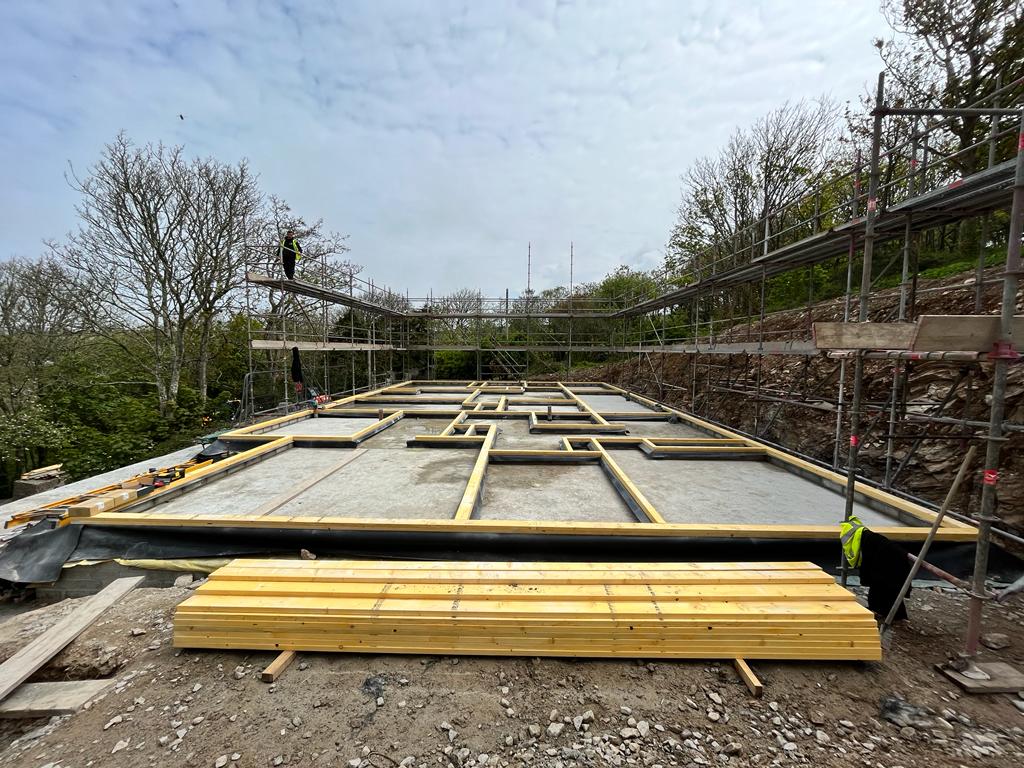
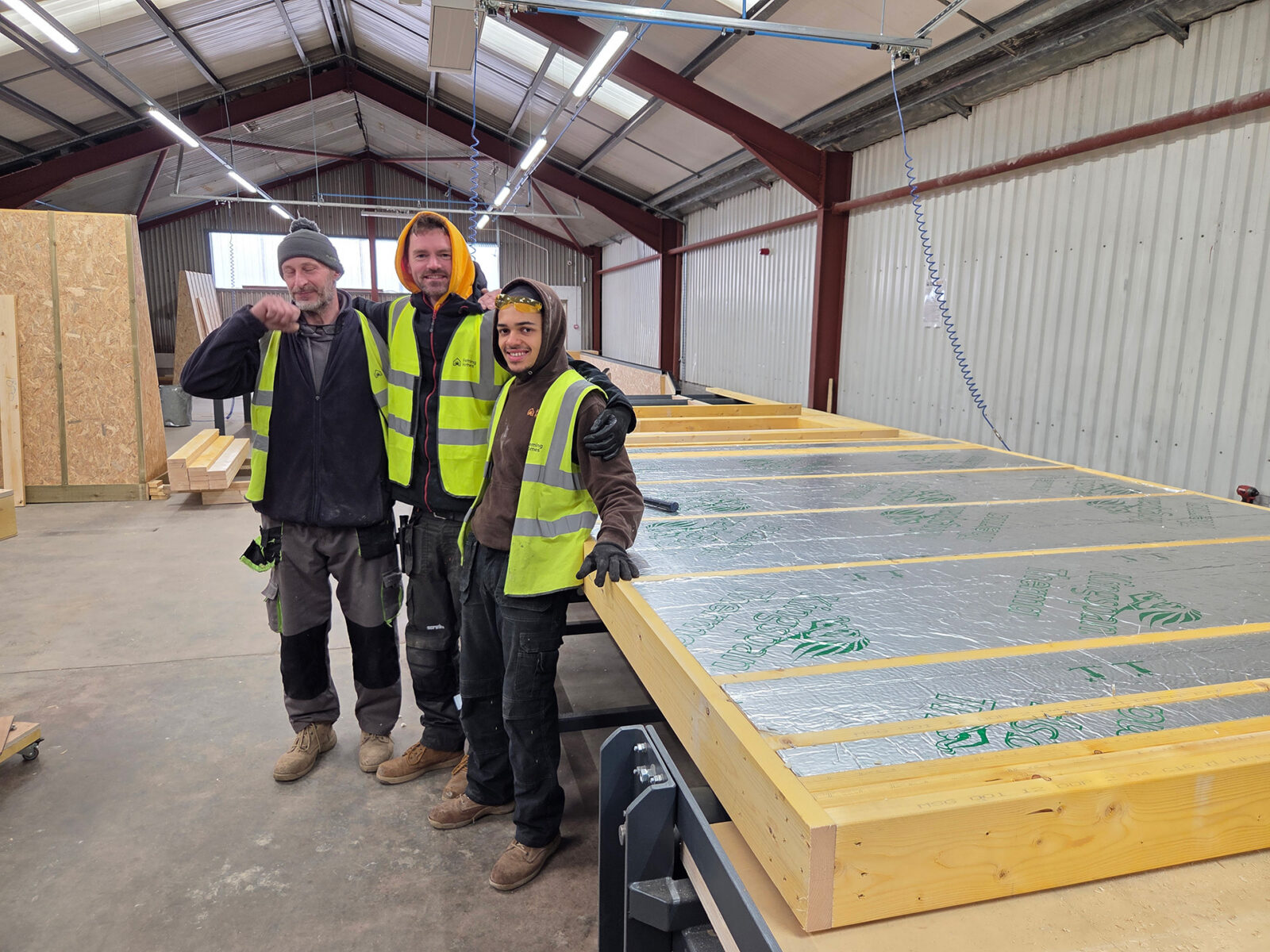
Timber is a natural material. It rewards careful handling and punishes the opposite. In a factory, the materials for your home are cut, assembled and stored under cover, in controlled conditions. On a plot, they take whatever the weather offers, which can be rain, mud, wind, and the overnight temperature swings that affect how timber moves.
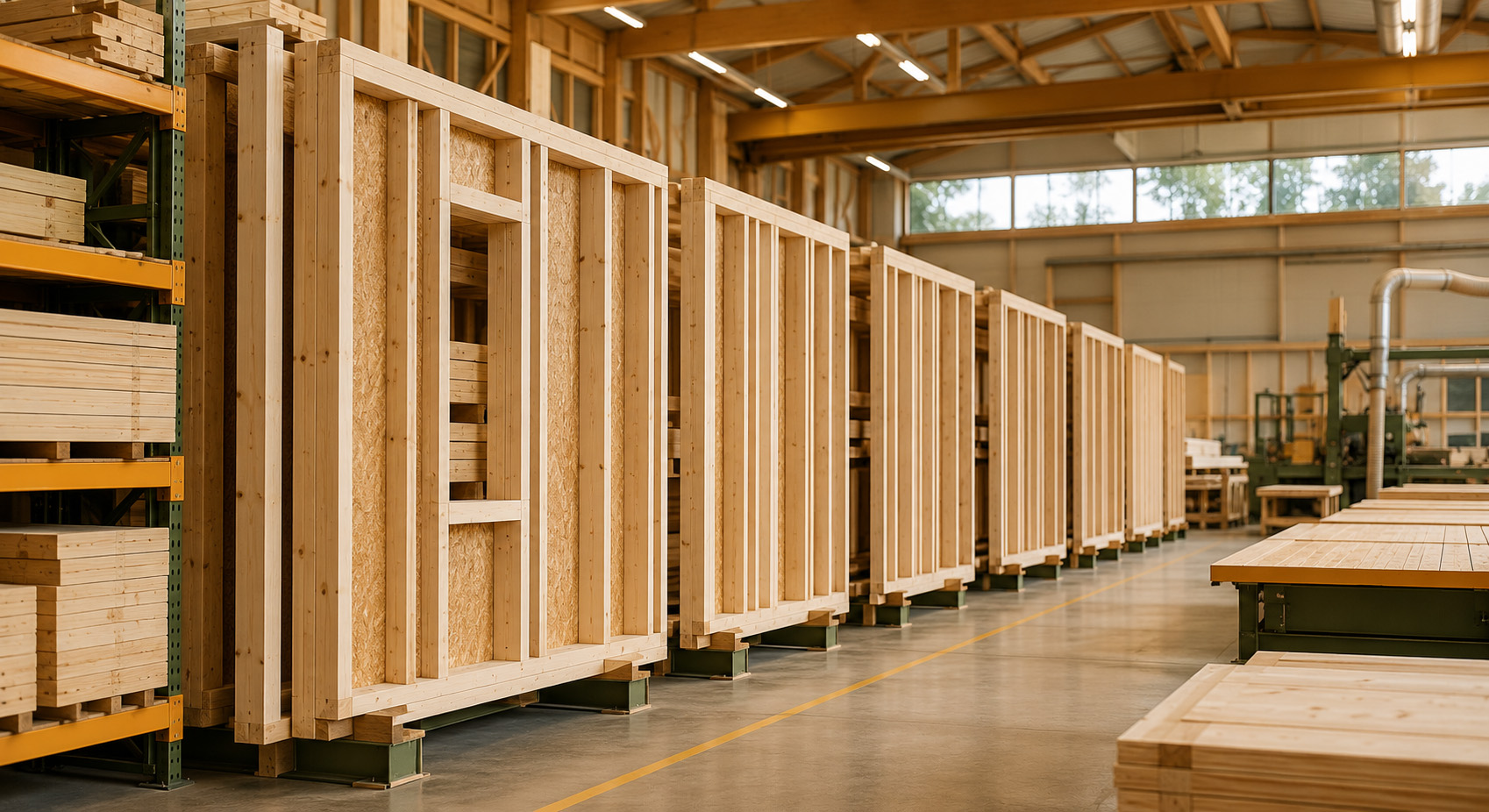
Both routes can produce a finished home, but a prefabricated timber frame involves far less luck.
2. Independent Audits Stand Behind Every Panel
A timber frame is a structural system, so the question worth asking any supplier is – who checks the checker? Look for ISO 9001:2015 certification and STA Gold Assure accreditation. Both involve external auditors reviewing the manufacturing process at intervals. Don’t rely on the company’s word about its own work but instead look for verifiable third-party scrutiny.
That’s harder to replicate on a plot, where the team building your frame is also the team answering for it.
3. Every Metre of Timber Is Planned Before It Leaves the Factory
One of the underappreciated advantages of off-site manufacture is the cutting schedule, which is the detailed plan of how each length of timber will be used. Waste decreases because efficiency is designed in from the start.
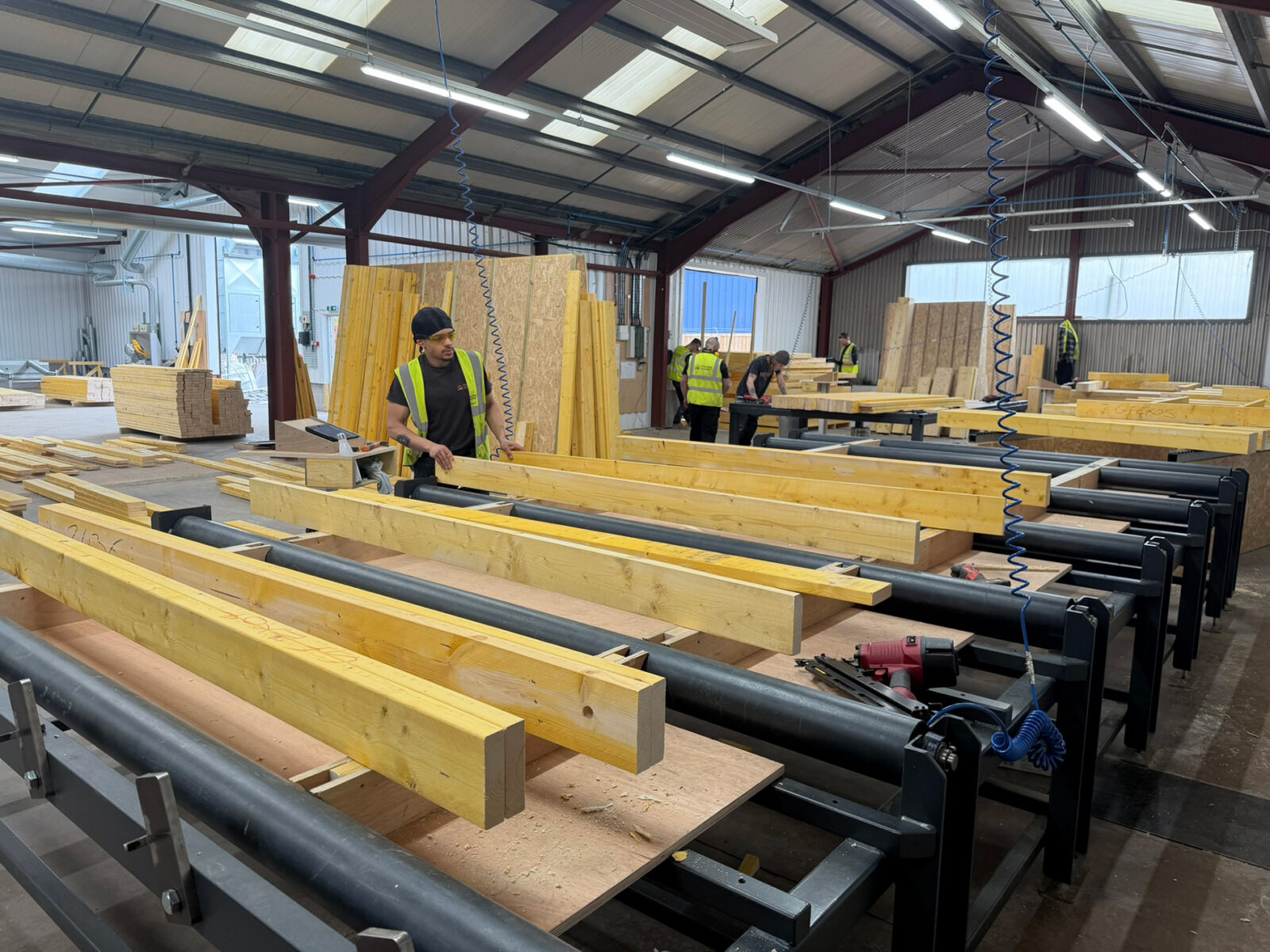
On site, ordering looks more like “enough, plus contingency” and that’s where damage can happen and the offcuts can pile up. Stick-building can look cheaper at the quotation stage, but the savings can quickly be eaten up by rework, over-ordering, and slippage in your build schedule.
4. Wind and Watertight in Around Two Weeks
A typical four-bedroom, 250m² Fleming Homes self-build reaches the wind and watertight stage in around two weeks from the start of erection. That’s not just a milestone. It influences the pace of progress thereafter. Scaffolding hire is shorter, follow-on trades can be sequenced with confidence, and your roof is on before the weather has time to make a project of it.
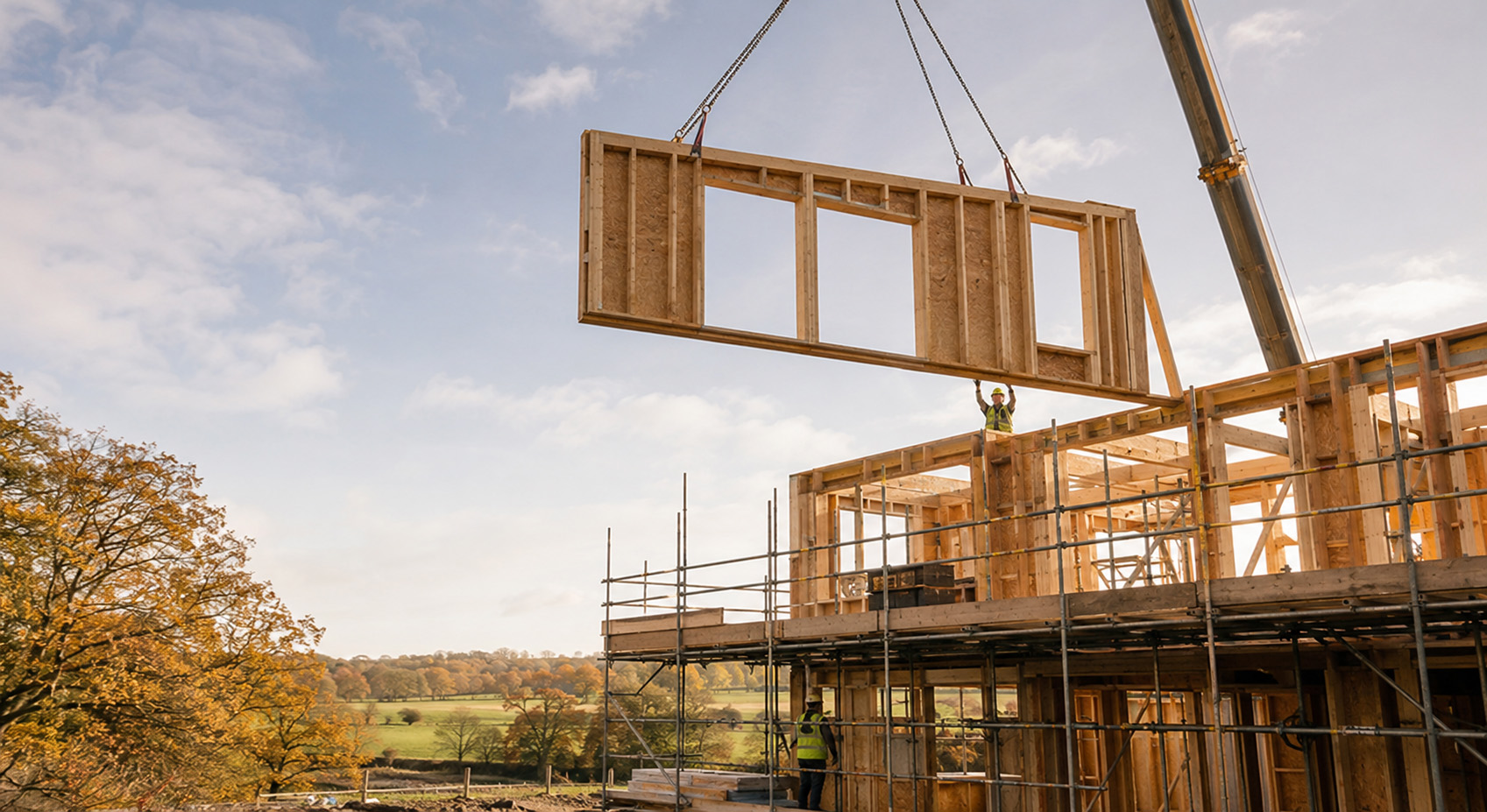
With stick-building, that timeline depends on one joiner’s availability, pace, and luck with the weather. You’re essentially handing them your programme.
5. The Difficult Questions Get Answered Before Anyone Arrives on Site
A self-build relies on architects, engineers, designers, groundworkers, erection teams, roofers, window suppliers, and more. The more decisions left unresolved when your project starts on site, the more pressure lands on you, in real time, in muddy boots.
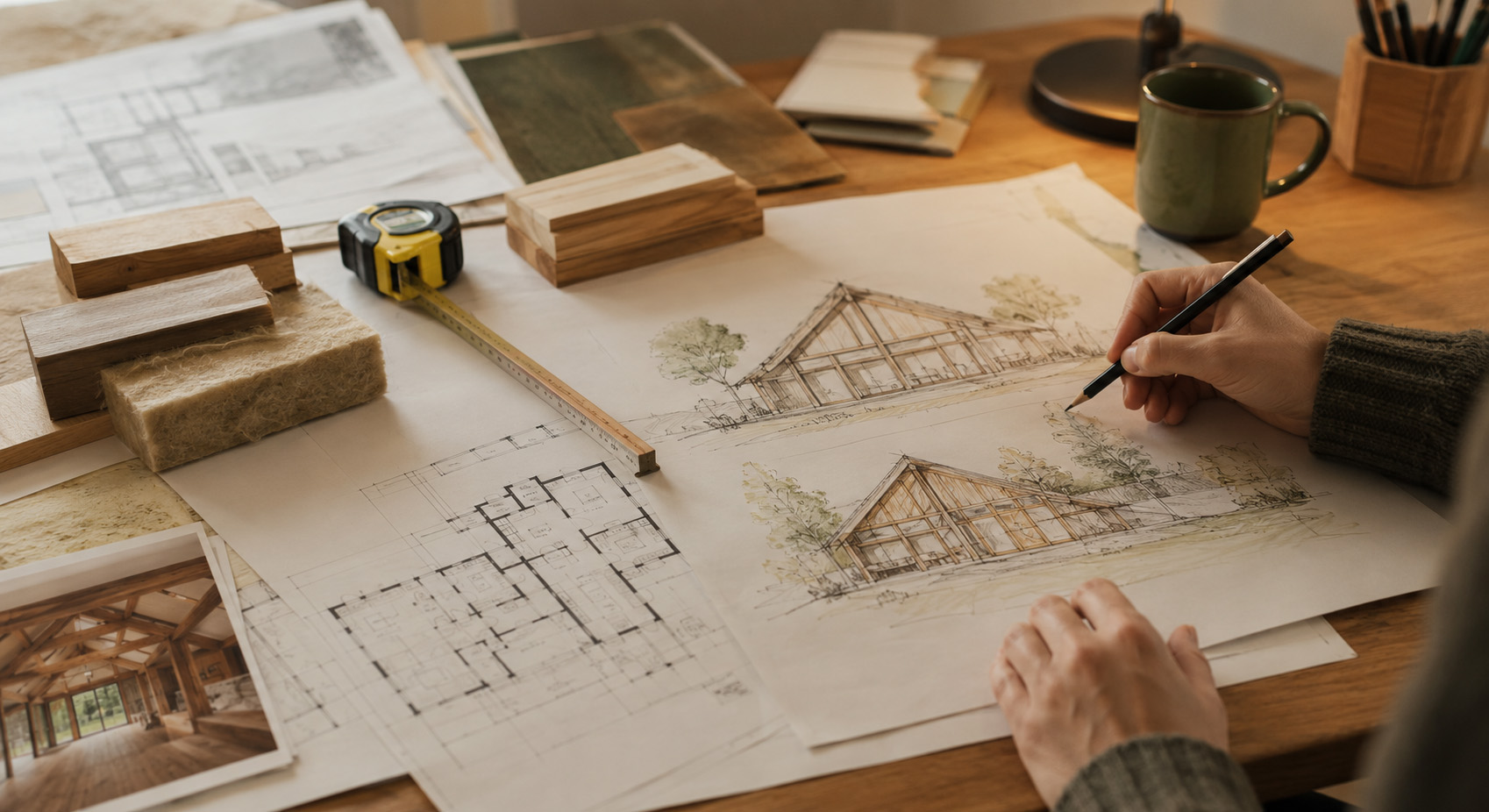
A factory-manufactured timber frame is engineered before fabrication begins. Dimensions, openings, services, and structural details are all worked out on paper, by people whose job is to get them right. By the time the lorry arrives, the problem solving is already done.
That early coordination is one of the reasons we put so much into the design and specification stage at Fleming Homes. A timber frame package isn’t a product on a shelf. It shapes the momentum of everything that follows.
So, Should You Stick-Build?
For a small, unusual project, or a plot where access limits what a lorry can manage, stick-building can be the right call. For most self-builds, a prefabricated frame gives you something more valuable than a few thousand off the kit price. It’s a path that has been walked before, by people who know where it bends.
If you’re at the point of weighing this decision, our complimentary design service is a low-risk way to start. No upfront cost, no commitment, and a chance to work alongside our team on a real design for your project. It’s also the most honest way to find out what working with Fleming Homes feels like, before you spend a single pound with us.
If you’d simply like a timber frame quotation, we’d be happy to receive your plans. Or do you have a question you’d like to talk through? Please do get in touch. We’re always happy to answer the questions that don’t fit into a brochure.
Sarah Mathieson
Managing Director, Fleming Homes
FAQ
Is stick-building cheaper than a factory-manufactured timber frame?
Stick-building often looks cheaper on the quotation, but the gap narrows once you account for rework, over-ordering, weather delays and longer scaffolding hire. A factory-manufactured frame fixes more of the cost on paper before work begins, which makes budgeting more predictable. Our cost calculator is a useful starting point.
How long does a factory-manufactured timber frame take to erect?
A typical four-bedroom, 250m² Fleming Homes timber frame reaches the wind and watertight stage in around two weeks from the start of erection. That early weathertight point lets follow-on trades be scheduled with confidence and keeps scaffolding hire shorter.
What certifications should I look for in a timber frame manufacturer?
Look for ISO 9001:2015 certification and STA Gold Assure accreditation. Both bring external auditors in to review the manufacturing process at set intervals, so you are relying on independent third-party scrutiny rather than the company’s own word. There is more on what sets a timber frame supplier apart.
When does stick-building make sense?
Stick-building can be the right call for a small or unusual project, or a plot where access limits what a delivery lorry can reach. For most self-builds, a prefabricated frame removes more risk and gives you a route that has been proven many times before.
How can I work out which route suits my project?
Fleming Homes offers a complimentary design service with no upfront cost and no commitment. It is a low-risk way to develop a real design for your plot and see how the two routes compare for your budget, timeline and site. You can also get in touch to request a quotation or talk a question through.