31 July 2026
Insulation, Sustainability and Self-Building: Why the Conversation is Changing
By Hayden Martin, Owner and Operations Director
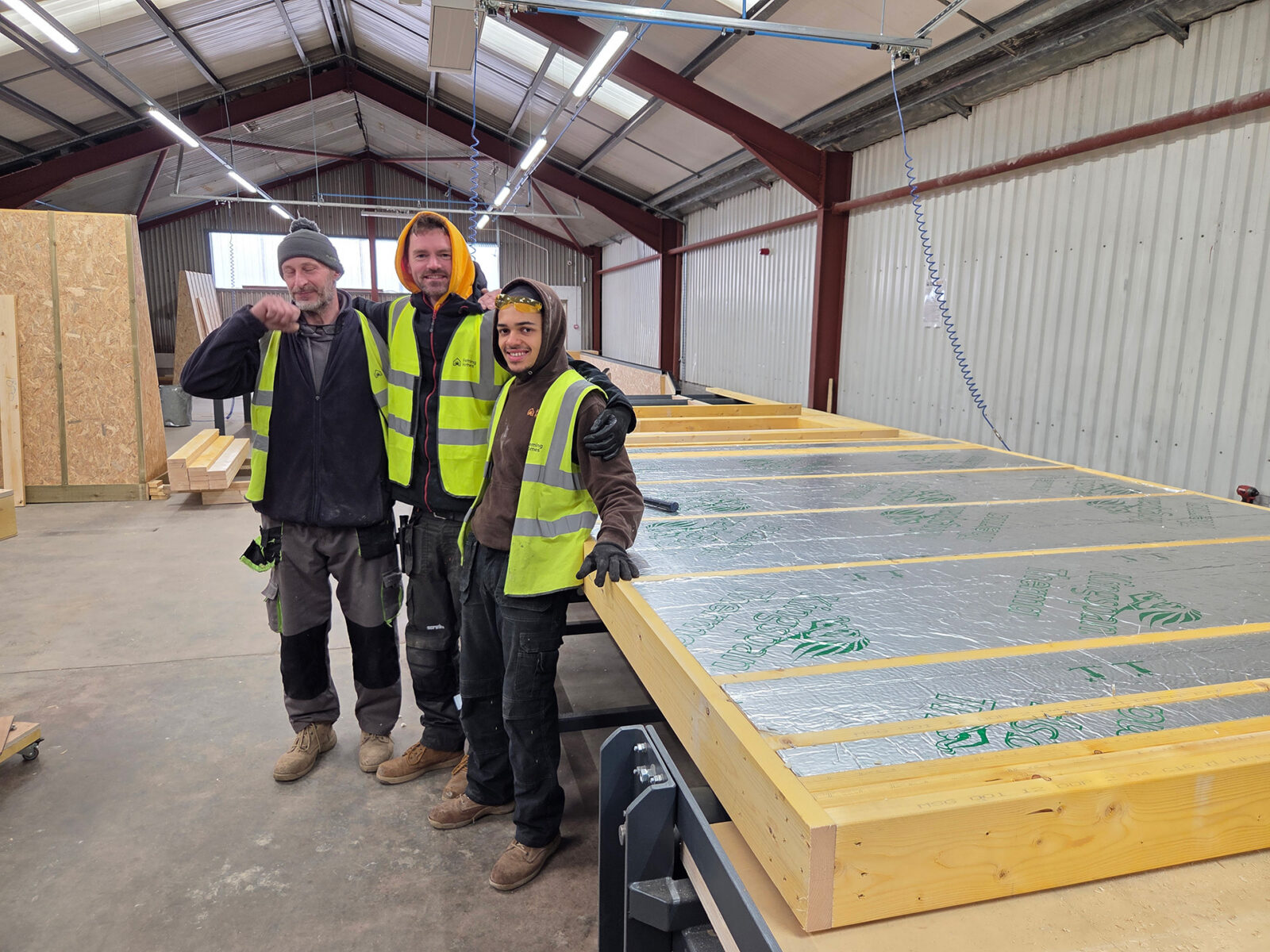
Insulation is one of the hottest topics in self-build right now – and one of the first subjects we discuss with prospective clients.
“What insulation do you use?” and “What U-values can you achieve?” are among the most common questions asked during an initial conversation.
And rightly so.
The way your home is insulated has a direct impact on how comfortable it feels to live in and how much energy it consumes throughout its lifetime. A well-insulated home should be warm during the depths of winter, comfortable during summer months and energy efficient all year round. Getting this right is one of the most important decisions in any self-build project.
What is interesting, however, is how the conversation around insulation is evolving.
Traditionally, the focus was almost entirely on thermal performance. Homeowners wanted reassurance that their new home would be warm, comfortable and inexpensive to heat. While these considerations remain hugely important, another factor is increasingly influencing decision-making: sustainability.
The Rise of Sustainability in Insulation Choices
To understand this shift, it is worth looking at one of the most widely used insulation products in the UK self-build market: PIR insulation.
Whether a home is built using timber frame, masonry construction or structural insulated panels (SIPs), PIR insulation has long been a popular choice. The reason is simple. PIR has one of the lowest thermal conductivities of any mainstream insulation product relative to its thickness. In practical terms, it enables designers and manufacturers to achieve very low U-values without requiring excessively thick walls.
For homeowners focused primarily on energy efficiency, PIR has traditionally been an attractive solution. It can help reduce heating demand and allows high levels of insulation to be incorporated within relatively compact wall constructions. Combined with its widespread availability and competitive cost, it is easy to see why PIR has become such a dominant product within the construction industry.
However, thermal performance is only part of the story.
Looking Beyond Thermal Performance
As awareness of embodied carbon and sustainable construction grows, many self-builders are beginning to ask additional questions.
- How is the insulation manufactured?
- What environmental impact does it have?
- What materials are used in its production?
- What happens at the end of its life?
PIR insulation performs strongly in thermal terms, but it is a petrochemical-based product manufactured through energy-intensive industrial processes. As a result, it carries a significantly higher embodied carbon footprint than many natural insulation alternatives.
At the same time, there is increasing interest in creating healthier indoor environments. Homeowners are becoming more conscious of the materials used within their homes and are looking for solutions derived from natural, renewable resources wherever possible.
This changing mindset is encouraging a broader discussion about insulation choices and what defines a truly sustainable home.
Natural Alternatives are Gaining Momentum
The good news for self-builders is that PIR is far from the only option available.
Materials such as woodfibre, hemp and sheep’s wool are attracting growing attention across the construction industry. These products are derived from renewable resources, generally require less energy to manufacture and often carry significantly lower embodied carbon than petrochemical-based insulation products. In the case of woodfibre, the raw material has already absorbed carbon as it grew, offsetting much of the carbon emitted in manufacture.
Many natural insulation products also contribute to moisture management and thermal comfort within a building. Sheep’s wool, for example, can absorb around a third of its own weight in moisture while continuing to insulate, helping to buffer humidity inside the home.
Importantly, choosing a more sustainable insulation material does not mean sacrificing energy performance.
With appropriate design and specification, natural insulation products can achieve wall U-values of 0.15 W/m²K and better – comfortably ahead of current building regulations – and help create highly efficient homes with low running costs. While wall build-ups may sometimes need to be thicker than those using PIR, the end result can still be a home that performs superbly while reducing environmental impact.
Why Timber Frame Has a Distinct Advantage
This is where timber frame construction comes into its own.
One of the greatest strengths of timber frame is its flexibility. Unlike some construction systems that rely upon a specific insulation product as part of their core structure, timber frame can accommodate a wide range of insulation materials and wall configurations.
Whether your priority is achieving the lowest possible U-value, reducing embodied carbon, creating a healthier living environment or balancing all three objectives, timber frame provides the freedom to design a solution that meets your goals.
Natural insulation products can be incorporated with ease, additional insulation layers can be added where required and wall constructions can be adapted to suit the performance requirements of each individual project.
This flexibility gives self-builders genuine choice.
Rather than being constrained by a particular system or insulation type, homeowners can select the solution that best aligns with their priorities and values.
When combined with sustainably sourced timber – itself a renewable building material that locks away roughly a tonne of carbon dioxide in every cubic metre for the lifetime of the building – the result is a construction method capable of pairing very low U-values with a substantially reduced carbon footprint.
The Future of Home Insulation
The conversation around insulation is no longer solely about achieving the lowest U-value.
Thermal performance remains critically important, but today’s self-builders are increasingly looking at the bigger picture. They want homes that are energy efficient, environmentally responsible and healthy places to live.
As awareness grows, the focus is shifting from simply asking, “How warm will my home be?” to also asking, “What impact will the materials used have on the environment and on future generations?”
For many self-builders, the ideal solution is no longer a choice between performance and sustainability.
It is achieving both.
For over 40 years, Fleming Homes has championed timber frame construction because of the flexibility it offers. Whether your priority is energy efficiency, reduced embodied carbon or a balance of both, timber frame provides the freedom to create a home that delivers on every front.
If you are weighing up insulation options for your own project, our design service is a good place to start. We will work through your ideas with you and shape a design – and a wall construction – around your priorities, before you commit a penny to architectural fees. Get in touch to begin the conversation.